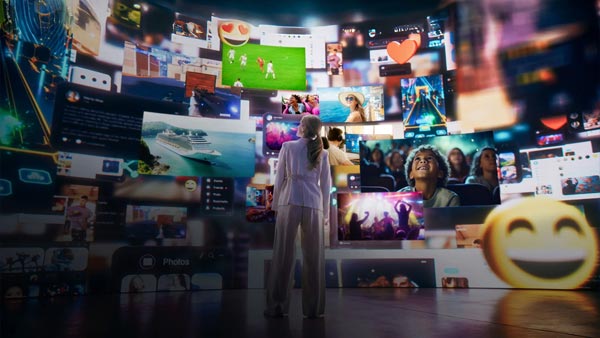

Entertainment has always evolved alongside technology. From radio and television to streaming services and social media, every technological breakthrough has changed how people consume and experience entertainment.
Today, another major transformation is taking place: the rise of interactive entertainment.
Unlike traditional entertainment, where audiences mainly watch or listen, interactive entertainment allows people to participate directly. Video games, interactive stories, live streams, virtual experiences, social platforms, and immersive digital environments are all examples of how audiences are becoming active participants rather than passive viewers.
What Is Interactive Entertainment?
Interactive entertainment refers to digital experiences in which users can influence, control, or participate in the content.
Traditional movies, for example, generally follow a fixed storyline. Interactive entertainment can give users choices that affect what happens next.
Video games are one of the clearest examples. Players control characters, make decisions, solve challenges, and influence the outcome of their experiences.
Other forms of interactive entertainment include:
- Interactive streaming content
- Online multiplayer games
- Live broadcasts with audience participation
- Virtual reality experiences
- Interactive storytelling
- Social media content
- Digital events and virtual communities
The common feature is participation. Users are no longer simply consuming entertainment—they are helping shape the experience.
The Growth of Video Games
Video games have played a central role in the development of interactive entertainment.
Early games were relatively simple, but technological improvements have allowed developers to create enormous virtual worlds with detailed environments, complex characters, and sophisticated storylines.
Modern games can combine storytelling, competition, exploration, social interaction, and creativity.
Some games allow players to create their own environments or content, making them not only consumers but also creators.
This has helped gaming become one of the most influential forms of interactive entertainment.
Social Media Changed Audience Participation
Social media has also transformed entertainment by giving audiences the ability to participate directly.
Users can comment on videos, share posts, create memes, react to live broadcasts, and communicate with creators.
A piece of content can quickly become part of a larger conversation involving thousands or even millions of people.
This has created a new relationship between creators and audiences. Instead of producing content and waiting for traditional audience feedback, creators can receive immediate responses and adapt their content accordingly.
The Rise of Live Interactive Experiences
Live streaming has added another important dimension to interactive entertainment.
Viewers can watch events as they happen while communicating through live chats, polls, reactions, and other interactive features.
Gaming streams are a particularly strong example. Viewers can watch players compete while discussing the action and interacting with the streamer and other audience members.
Live entertainment therefore combines traditional viewing with real-time participation.
Interactive Storytelling
Storytelling is also becoming more interactive.
Traditional stories follow a predetermined sequence, but interactive experiences can give audiences choices that influence characters, events, or endings.
This approach can make users feel more emotionally involved because their decisions become part of the story.
Interactive storytelling can be used in games, digital shows, educational experiences, and other forms of entertainment.
As technology develops, the distinction between watching a story and participating in one may become increasingly difficult to define.
Virtual Reality and Immersive Entertainment
Virtual reality has introduced another level of interaction.
Instead of viewing a digital environment through a traditional screen, users can enter a simulated environment and interact with it.
VR technology can be used for gaming, virtual events, interactive storytelling, simulations, and social experiences.
Although widespread adoption still faces challenges such as hardware costs and accessibility, virtual reality demonstrates the potential for entertainment to become increasingly immersive.
Artificial Intelligence Is Expanding Possibilities
Artificial intelligence is another technology influencing interactive entertainment.
AI can help create characters that respond dynamically to users, generate personalized content, assist game development, and create more responsive digital environments.
Instead of every user experiencing exactly the same content, future entertainment could adapt to individual choices and behavior.
This could make digital experiences feel more personalized and unpredictable.
Personalization Is Becoming More Important
Digital platforms have become increasingly skilled at understanding user preferences.
Streaming services recommend content based on viewing habits, social platforms personalize feeds, and games can adjust experiences based on player behavior.
Personalization makes entertainment feel more relevant.
However, it also raises questions about privacy, data collection, and how much influence algorithms should have over what people see and experience.
Audiences Are Becoming Creators
One of the most significant changes in digital entertainment is the disappearance of the clear boundary between creator and consumer.
Users can now create videos, podcasts, livestreams, games, music, artwork, and other digital content with relatively accessible tools.
Platforms can help individual creators reach global audiences without requiring traditional media companies.
This has created an enormous ecosystem of user-generated entertainment.
A fan can become a creator, a viewer can become a streamer, and a player can become a game designer.
The Importance of Community
Interactive entertainment is often successful because it creates communities.
Players can form teams, viewers can communicate during live broadcasts, and fans can gather around shared interests.
These communities can become an important part of the entertainment experience.
People are not necessarily looking only for something to watch or play. They may also be looking for people with whom they can share the experience.
This social dimension gives interactive entertainment a level of engagement that traditional media sometimes struggles to provide.
The Mobile Revolution
Smartphones have accelerated the growth of interactive entertainment.
Mobile devices allow people to access games, social media, live streams, interactive stories, and virtual experiences almost anywhere.
Touchscreens also make interaction simple. Users can tap, swipe, record, comment, react, and create content from a single device.
As mobile technology becomes more powerful, interactive entertainment is becoming increasingly accessible.
The Business of Interactive Entertainment
Interactive entertainment has also created new business models.
Companies can generate revenue through subscriptions, advertising, digital purchases, premium content, sponsorships, and other services.
Creators can build businesses around their communities through memberships, partnerships, merchandise, and digital products.
The ability to measure engagement also gives companies detailed information about how audiences interact with content.
This makes audience participation valuable not only culturally but economically.
Challenges of Interactive Entertainment
Despite its many advantages, interactive entertainment also creates challenges.
Constant notifications and highly engaging platforms can encourage people to spend more time online than they originally intended.
Online communities can also experience problems such as harassment, misinformation, and toxic behavior.
Privacy is another important issue. Personalized entertainment often relies on user data, making responsible data collection and security essential.
As interactive entertainment becomes more powerful, developers and platforms will need to consider both engagement and user well-being.
What Does the Future Hold?
The future of interactive entertainment could combine several technologies at once.
Imagine watching a live event while interacting with other viewers, entering a virtual environment, controlling elements of the experience, and receiving personalized content generated in real time.
Advances in artificial intelligence, virtual reality, augmented reality, cloud computing, and faster internet connections could make these experiences increasingly sophisticated.
The entertainment of the future may not be something people simply watch. It may be something they actively shape.
Final Thoughts
The rise of interactive entertainment represents a major shift in how people experience digital content.
Video games, social media, live streaming, virtual reality, artificial intelligence, and interactive storytelling are all contributing to a world where audiences have greater control and participation.
The biggest change is not simply technological. It is a change in the relationship between entertainment and its audience.
People are no longer satisfied with simply watching from the sidelines. They want to interact, influence, create, communicate, and become part of the experience.
As digital technology continues to advance, interactive entertainment will likely become even more immersive and personalized. The future of entertainment may ultimately be defined not by what audiences watch, but by what they can do.