
In an entertainment world filled with streaming services, social media, video games, and on-demand content, live sports continue to attract enormous audiences around the world.
People can watch movies whenever they want, pause television shows, and replay videos on demand. Yet millions of fans still make time to watch sporting events as they happen.
From major football matches and basketball games to tennis tournaments, motorsports, and international competitions, live sports have a unique ability to bring people together.
So, what makes live sports so compelling in an age of endless digital entertainment?
The Excitement of Uncertainty
One of the biggest reasons people watch live sports is simple: you don’t know what will happen next.
A movie has a predetermined ending. A television series can be paused and resumed whenever convenient. Live sports are different because the outcome is still being decided.
A team can score in the final seconds. An underdog can defeat a favorite. A seemingly comfortable lead can disappear in minutes.
This uncertainty creates genuine suspense. Fans are not simply watching a story—they are witnessing an unpredictable event unfold in real time.
You Can’t Truly Replay the Moment
Recorded entertainment can be watched whenever convenient, but live sports have a special sense of timing.
Fans often want to experience important moments as they happen. A championship-winning goal, dramatic finish, record-breaking performance, or unexpected upset can become a shared cultural moment.
Watching a replay can provide the highlights, but it cannot completely recreate the feeling of discovering the result alongside everyone else.
That sense of being present at a particular moment is one of the strongest advantages of live sports.
Sports Create Shared Experiences
Sports have a remarkable ability to bring people together.
Friends can watch the same game from different locations while communicating online. Families can gather around a television. Fans can celebrate together inside stadiums or connect with strangers through social media.
A major sporting event can create a temporary community of people who share the same excitement, disappointment, anticipation, and celebration.
This social element is difficult for many other forms of entertainment to reproduce at the same scale.
The Emotional Connection to Teams and Athletes
Sports fans often develop strong emotional connections to teams, players, and athletes.
Supporting a team can become part of someone’s identity and daily life. Fans may follow a club for years, remember historic matches, and develop traditions around watching games.
This long-term relationship makes sporting events more meaningful.
A single match is rarely viewed as an isolated piece of entertainment. It can be connected to an entire season, a rivalry, a championship race, or years of sporting history.
Rivalries Make Games More Compelling
Rivalries are another major reason live sports attract large audiences.
When two teams or athletes have a history of intense competition, even a regular match can become a highly anticipated event.
Rivalries add context and emotional significance. Fans understand what is at stake beyond the immediate score.
The history between competitors can transform a sporting event into a story that audiences want to follow from beginning to end.
The Power of Major Events
Certain sporting events attract extraordinary global audiences because they combine competition with cultural significance.
Championship finals, international tournaments, major racing events, and other prestigious competitions can attract viewers who do not regularly follow the sport.
These events become occasions rather than simply games.
People may organize gatherings, travel to watch competitions, wear team colors, and participate in traditions surrounding the event.
Live Sports Fit the Digital Age
Interestingly, the growth of digital entertainment has not necessarily weakened live sports. Instead, technology has created additional ways for fans to experience them.
Viewers can watch games through streaming services, follow live statistics on smartphones, participate in online discussions, and watch short clips during or after the event.
Social media can also extend the conversation beyond the stadium.
A single sporting event can generate thousands of posts, memes, reactions, interviews, and analysis while the competition is still taking place.
Second-Screen Viewing
Many sports fans now use multiple devices while watching a game.
A television or streaming service may display the main event while a smartphone provides additional statistics, social media conversations, fantasy sports information, or instant highlights.
This behavior, sometimes called second-screen viewing, can make sports more interactive.
Instead of simply watching, fans can simultaneously discuss and analyze what they are seeing.
Live Sports Are Naturally Social
Unlike many forms of entertainment that are designed for individual consumption, sports are naturally suited to group experiences.
Fans can cheer, react, debate decisions, celebrate victories, and express disappointment together.
Even when people are physically separated, digital communication allows them to share those experiences.
The social nature of sports is one reason live events continue to thrive despite the enormous amount of individual entertainment available online.
The Role of Storytelling
Sports are also powerful because they create stories without requiring a script.
Every season introduces new characters, challenges, rivalries, successes, and failures.
An athlete returning from an injury, a young player becoming a star, or an underdog competing against a heavily favored opponent can create compelling narratives.
The difference is that these stories develop through real events rather than fictional writing.
Fans become emotionally invested because the outcome is uncertain and the consequences are real.
The Importance of Atmosphere
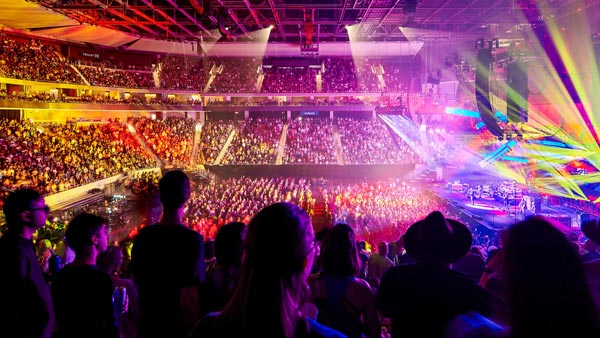
Watching a live sporting event in a stadium offers an atmosphere that cannot be perfectly reproduced through a screen.
The noise of the crowd, team chants, stadium lights, celebrations, and shared anticipation create a powerful sensory experience.
Even viewers at home can feel some of this atmosphere through broadcast commentary, crowd sounds, camera angles, and live production.
The environment helps transform a sporting event into an experience rather than simply a piece of video content.
Technology Is Improving the Viewing Experience
Modern sports broadcasts use increasingly sophisticated technology to make games easier and more engaging to follow.
High-definition video, multiple camera angles, instant replays, real-time statistics, graphics, and slow-motion footage provide viewers with information that may not have been available in earlier eras.
Streaming technology also gives audiences more flexibility in how they watch.
These innovations do not replace the excitement of live sports. Instead, they can make the experience more accessible and informative.
Fans Want to Be Part of the Story
Perhaps the most important reason live sports remain popular is that fans want to feel involved.
They want to celebrate victories, experience dramatic moments, discuss controversial decisions, and support their favorite athletes.
Even when watching from thousands of miles away, fans can feel like they are participating in something larger than themselves.
That feeling of belonging is difficult to replicate with purely individual forms of entertainment.
The Future of Live Sports
Live sports are likely to remain an important part of global entertainment as technology continues to evolve.
Streaming, virtual reality, augmented reality, personalized statistics, interactive broadcasts, and social media could make future viewing experiences even more immersive.
However, the fundamental appeal of live sports is unlikely to change.
There will always be excitement in watching an unpredictable event unfold, especially when the outcome matters to a community of passionate fans.
Final Thoughts
Live sports continue to capture massive audiences because they offer something that many other forms of entertainment cannot: real-time uncertainty combined with shared emotion.
Fans watch not only to discover who wins but also to experience the journey, celebrate important moments, connect with other supporters, and become part of a larger story.
In a world where almost everything can be watched on demand, live sports remain special precisely because they happen only once in the moment.
The game may last for only a few hours, but the memories, conversations, rivalries, and emotions it creates can last for years.