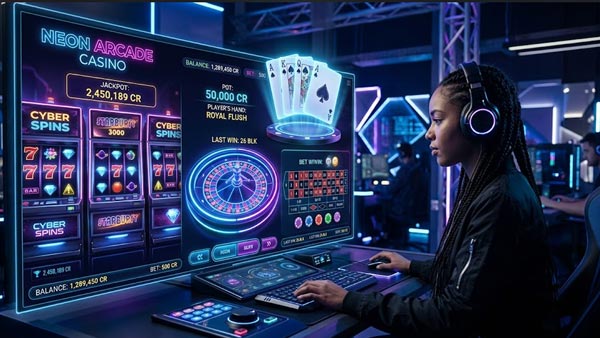

Game design is the invisible structure that transforms a simple set of rules into an addictive, emotional experience. Behind every hour a player spends exploring a digital world lies a carefully engineered framework of psychology, mechanics, and visual feedback tailored to keep the human mind fully immersed.
Core Game Design Mechanics Driving Engagement
- The Core Gameplay Loop: Every engaging game relies on a tight cycle of Action $\rightarrow$ Reward $\rightarrow$ Expansion. Players perform an action (defeating an enemy), receive a reward (loot or experience points), and unlock new capabilities (upgrading stats), driving them to repeat the cycle.
- Balancing Flow State: Based on Mihaly Csikszentmihalyi’s Flow Theory, designers dynamically scale difficulty against player skill. If a game is too easy, boredom sets in; if it is too punishing, frustration causes players to quit. Keeping players in the optimal “Flow Zone” maximizes retention.
- Juiciness & Audio-Visual Feedback: “Juice” refers to non-essential sensory feedback—screen shakes, glowing particles, custom sound effects, and snappy animations—that make every button press feel satisfying and impactful.
- Variable Reward Schedules: Borrowed from behavioral psychology, unpredictable rewards (such as random loot drops or rare card packs) spark higher dopamine responses than static, predictable payouts.
Structural Elements and Their Psychological Impact
| Game Design Component | Psychological Mechanism | Player Impact |
| Clear Goals & Feedback | Direct agency & purpose | Reduces cognitive friction; keeps players focused on short-term tasks. |
| Progression Systems | Self-determination & mastery | Satisfies the intrinsic human desire for growth and accomplishment. |
| Social & Co-Op Features | Belonging & social proof | Fosters long-term community retention through teamwork and competition. |
| Autonomy & Player Choice | Ownership & personalization | Increases emotional investment by allowing players to shape story or playstyle. |
By mastering the balance between challenge, reward, and sensory immersion, game designers construct worlds that capture attention, foster long-term loyalty, and keep players returning session after session.